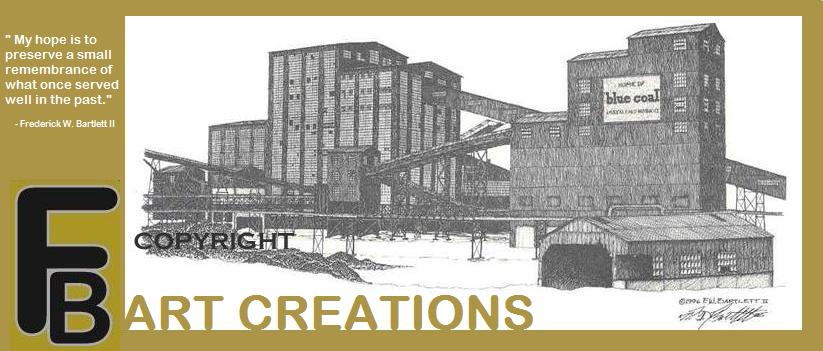
The hope to preserve a small remembrance of what once served well in the past was a prime concern of fine artist Fred Bartlett. Specializing in industrial relics as they appeared during his time, his race with demolition was often close, many times lost. Armed with a simple 35mm camera, a tripod and telephoto lens, he touched base with his subject matter almost always by chance and rarely in a well-planned effort. He just happened 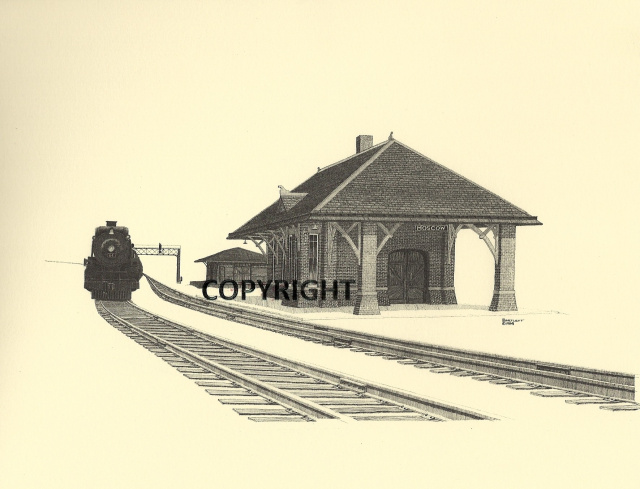 down that road, the light was right and the subject was worth recording.
Since he personally photo-researched almost everything he drew, he posed each subject as he saw fit by saturating the subject with close ups of every imaginable detail. Rivets, windows and gingerbread became screen-filling once projected. Courses of shingles became countable, patterns in brickwork discovered and hexheads distinguished themselves from stove bolts. Historical photographs were sometimes used to authenticate boarded up or missing windows.
Each drawing began in rough pencil outline form and was finalized in free hand pen and ink; either as a series of dots (stipple technique), line drawing, or a combination of the two. The process was laborious, time consuming, demanding and required meticulous attention to detail for hours at a time. Original pen and ink drawing completion times varied from under one hundred hours to the extreme of over 800 hours. Following the completion of each original drawing, most were reproduced through a high quality offset lithography technique. The limited reproductions were then carefully examined individually for consistency in quality and then numbered, titled, and signed in pencil by artist, Frederick W. Bartlett II.